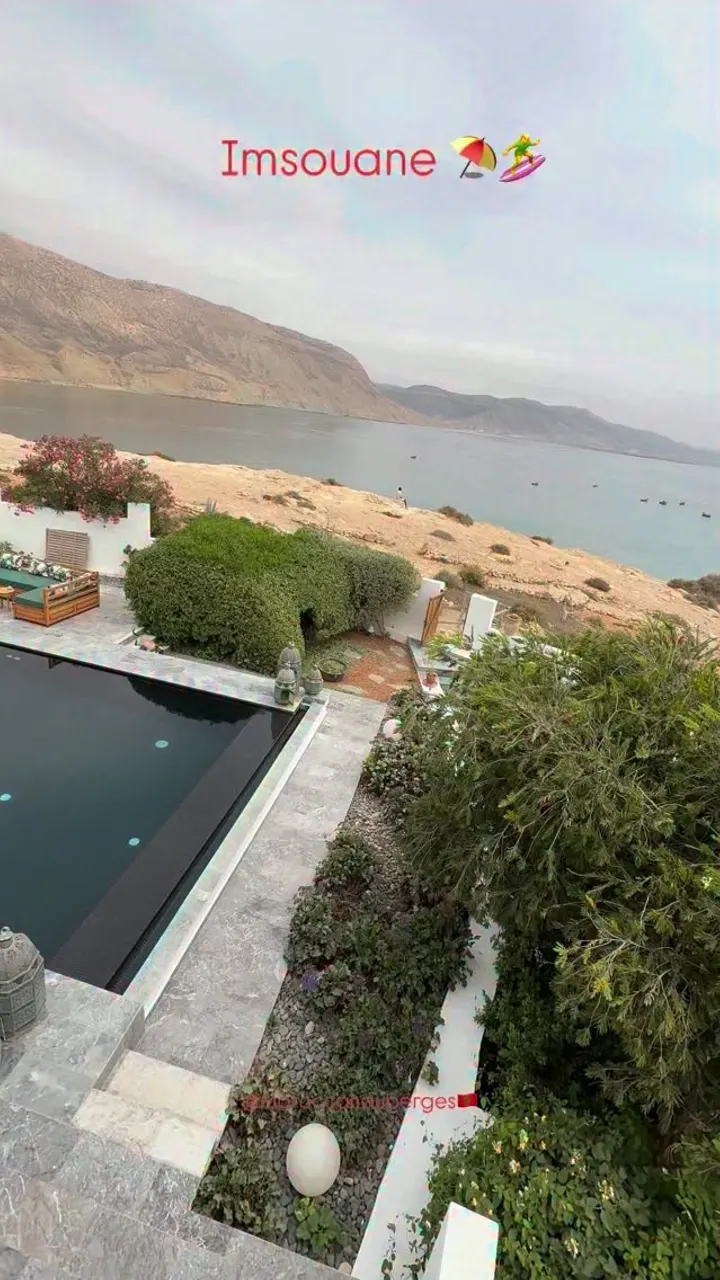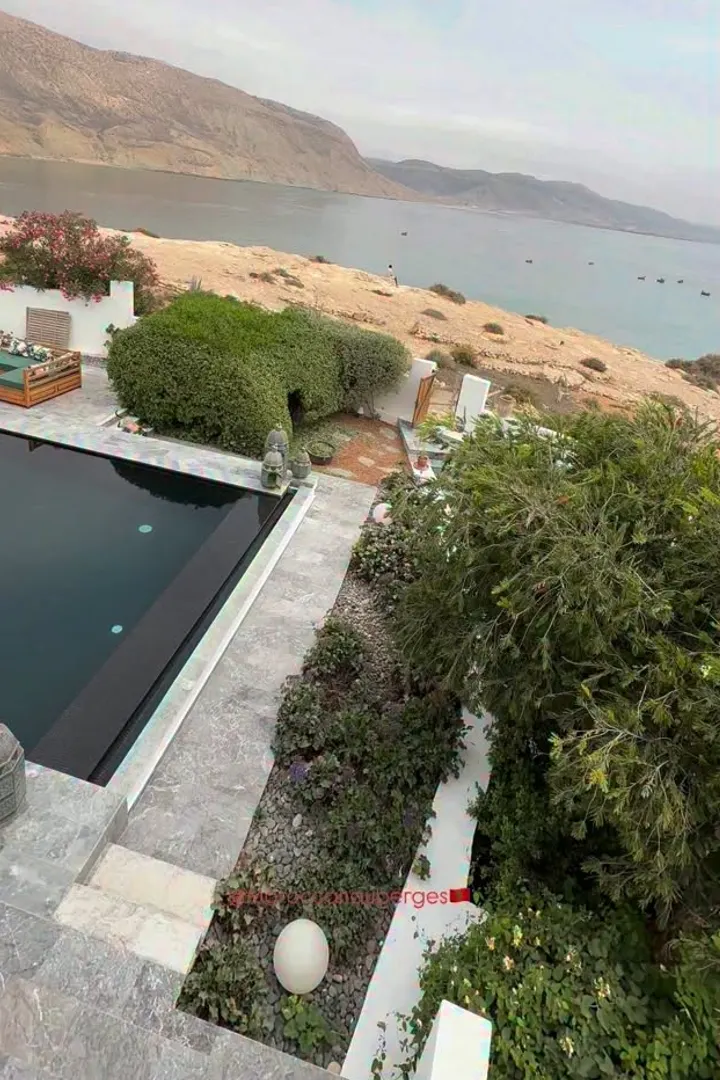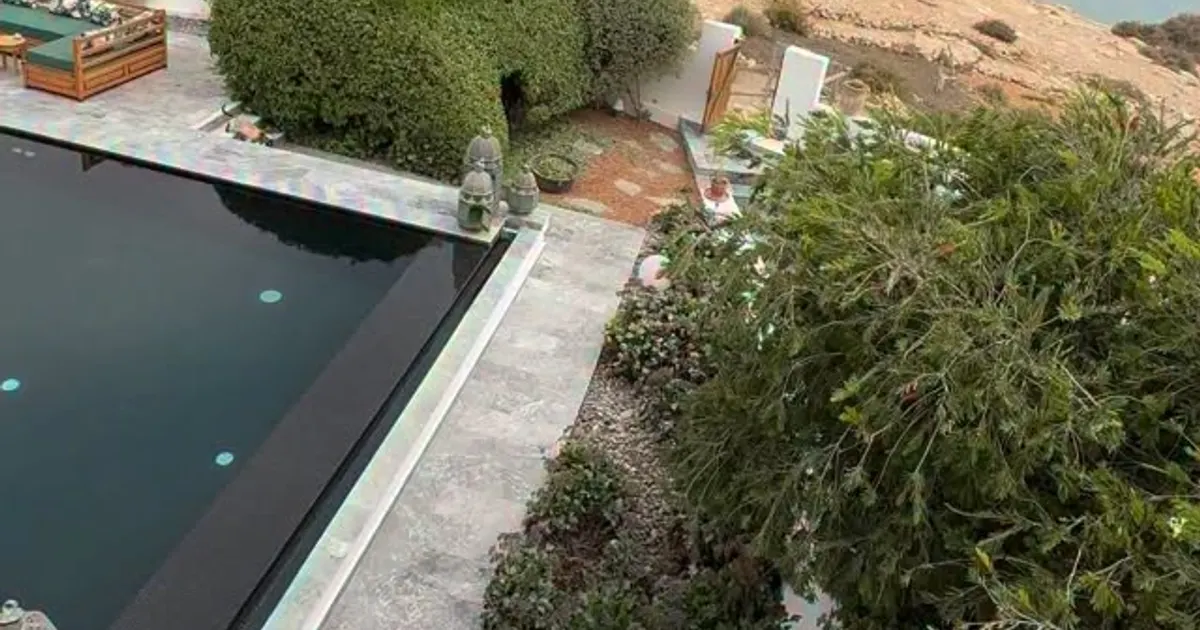
Where to stay in Imsouane: the bay, the reef and the rest
Imsouane comes down to three things: a sheltered bay, a fishing port, and a wave that runs for so long you stop counting. No promenade, no rows of large hotels — a village set between ocean and desert on Morocco’s Atlantic coast. Here is what you need before booking a night there.
Where exactly is Imsouane?
Imsouane is a small coastal town and rural commune in the Agadir-Ida Ou Tanane Prefecture, in the Souss-Massa region. It has no urban centre: its seat is a village of the same name. On the map, you will find it 70 km north of Agadir and 100 km south of Essaouira.
The name comes from Soussi Berber and is thought to mean “the mouth” (imi) “that drinks” (ssew): the bay the sea rushes into. You will also see it written Imssouane or Imessouane, depending on the road signs. The commune was created in 1992, during a redrawing of the kingdom’s territorial map.
Administratively, the rural commune of Imsouane belongs to the Tamri caïdat, itself part of the Agadir-Atlantique circle. One useful detail to set your expectations: the village lost inhabitants between the last two censuses, going from 9,353 people in 2004 to 8,866 in 2014. This is nowhere near a seaside resort.
Which spot suits which level?
Imsouane is known for its riding conditions — surfing, bodyboarding, longboarding — and the village has two clearly distinct breaks.
| Spot | The wave | Who it suits |
|---|---|---|
| La Bay | flat, unrolling over more than 800 metres; described as a long point break that works best low to mid tide | longboards and beginners |
| The reef, also called La Cathédrale | hollow, up to 5 to 6 metres high in winter; a more exposed beach break, faster and more powerful, especially on a northwest swell | shortboards, bodyboards, confident surfers |
In short: the bay forgives, the reef does not. Imsouane is part of Morocco’s Atlantic surf coast, alongside Taghazout and Tamraght.
When should you go to Imsouane?
The town occupies a sheltered bay bordered by cliffs and sandy beaches, which creates favourable surfing conditions throughout much of the year. Winter is the big-wave season: that is when the reef climbs to 5 or 6 metres. If you are starting out, aim for the bay, in any season, and plan your session around the tide rather than around breakfast.
For the general mood, the Moroccan National Tourism Office describes the Agadir area as sunny whatever the season, with a climate softened by the trade winds, and credits the neighbouring city with 300 days of sunshine per year.
Who comes to Imsouane?
Moroccan and international visitors alike, and surfers above all, drawn by long, consistent waves and by an atmosphere that stays relatively quiet. In recent years the tourism infrastructure has expanded: guesthouses, surf camps, restaurants and cafés have opened. It is still a village, but it is no longer a secret.
How do you get there?
Imsouane is connected by road to both Agadir and Essaouira. Public transport services are limited: private cars and taxis are the primary means of reaching the village. Sort this out before you book, especially if you arrive late — it is the one real logistical trap of the trip.
For a sense of driving scale, the Moroccan National Tourism Office counts 257.9 km and 3 h 00 between Marrakesh and Agadir, and 174.9 km and 2 h 55 between Essaouira and Agadir. Imsouane sits between the two towns, 70 km north of Agadir: add or subtract that last leg depending on where you set off from.
What is there to do when the sea is flat?
The fishing port is the heart of the village. Fishing remains an important traditional activity there: it supplies fresh seafood to residents and visitors and supports the livelihoods of local fishermen. Tourism has grown alongside it in recent years, with guesthouses, surf camps, restaurants and cafés opening — tourism and fishing are today Imsouane’s two principal economic activities.
If you head down to Agadir, the city unrolls a 10-kilometre seafront and a souk, the El Had souk, where the Moroccan National Tourism Office counts more than 6,000 shops. Every summer it hosts the Timitar festival, dedicated to world music and more specifically to Amazigh music. The office presents its bay as one of the most beautiful in the world.
The same office lists the five most popular things about the Agadir-Taghazout destination as argan oil, the Agadir Crocoparc, amlou, Taghazout and Mirleft, and adds the Big Wheel, the Valley of the Birds and Sidi Ifni to its must-see places. Enough to fill two days without ever putting a wetsuit back on.
Where can you stay on this coast?
Our Imsouane address is at the bottom of this page, with a direct link to talk it over on WhatsApp. If you are still weighing up regions, start with the six regions we cover. And if you head inland after the surf, our Ouzoud guide puts you to sleep facing the falls, in the central High Atlas.
Frequently asked questions
Is Imsouane for beginners or for experienced surfers?
Both, but not in the same spot. The bay unrolls a flat wave over more than 800 metres: that is longboard and beginner ground. The reef, hollow and able to reach 5 to 6 metres in winter, is for confident surfers.
How far is it from Agadir and Essaouira?
Imsouane lies 70 kilometres north of Agadir and 100 kilometres south of Essaouira, on the Atlantic coast. The road connects the village to both towns.
Is there public transport to the village?
It is limited. Private cars and taxis are the primary means of reaching Imsouane from Agadir or Essaouira, so it is worth settling the last-mile question before you leave.
Does the village live on surfing alone?
No. Fishing remains an important traditional activity and the local port supplies residents and visitors with fresh seafood. Tourism has been added to it, with guesthouses, surf camps, restaurants and cafés.
Stays from this guide